State of Emergency declared… and now the National Guard is deployed
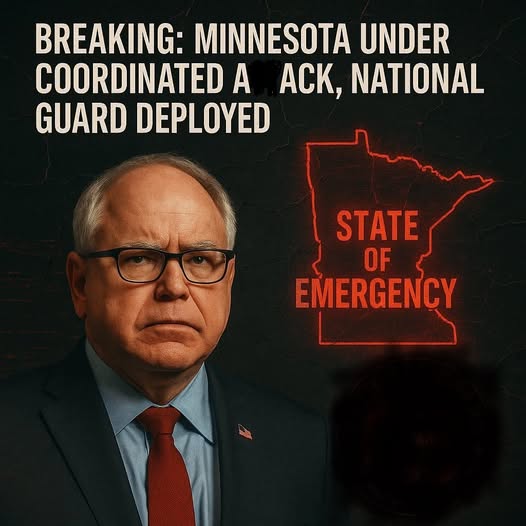
Earlier this week, Minnesota witnessed what might be the most terrifying digital assault on an American city to date. The entire city of St. Paul went offline. No Wi-Fi. No servers. No internal infrastructure. A full blackout.
And now the National Guard is involved.
Governor Tim Walz officially declared a state of emergency and signed an executive order activating the Minnesota National Guard’s cyber protection unit. Their mission? To determine what data — if any — was accessed, stolen, or compromised.
St. Paul Mayor Melvin Carter issued a chilling statement: “This was not a glitch. It was a deliberate, coordinated attack carried out by an external actor intentionally and criminally targeting our systems.”
That means this wasn’t some random outage. Someone took down a U.S. city’s digital backbone… and almost nobody is reporting on it.
What’s even more alarming is the silence. There’s no media frenzy. No national panic. Just a handful of official statements and local reports. Meanwhile, an entire American city’s data might be in foreign hands.
Is this just the beginning? Was this a test run for something much larger? The National Guard has boots on the ground — not for a hurricane or riot — but for a war in cyberspace.
Authorities have officially declared a state of emergency in response to rapidly developing conditions that have placed significant pressure on local resources and public safety systems. The decision was made to allow government agencies to act more quickly and coordinate support across multiple levels.
As part of the emergency response, units of the National Guard have been deployed to assist local and state authorities. Their role is focused on providing logistical support, helping maintain order where needed, and ensuring that essential services continue to operate without disruption. Officials emphasized that the deployment is intended to strengthen existing efforts rather than replace local responders.
Government leaders stated that the situation requires a unified approach, with emergency services, transportation departments, and public health officials working together. The state of emergency enables access to additional funding, equipment, and personnel, allowing response teams to adapt as conditions evolve.
Residents have been encouraged to remain informed through official communication channels and to follow guidance issued by local authorities. While officials acknowledged the seriousness of the situation, they also reassured the public that preventative measures are being taken to reduce risks and support affected communities.
The National Guard is expected to remain in place for as long as conditions require. Authorities will continue to assess the situation and adjust response strategies accordingly, with public safety and stability remaining the top priorities.