THE PHOTO THAT FOOLED MILLIONS — PEOPLE ONLY NOTICE IT AFTER STARING FOR 5 SECONDS
At first glance, nothing seems unusual about the picture. A girl standing in a sunny field, dressed in a simple white two-piece outfit, smiling with complete confidence. The moment feels soft, natural, and almost peaceful — the kind of photo you scroll past without thinking twice. But the second someone points out the tiny detail near her waist, everything changes instantly.

Our eyes trick us more than we like to admit. You can walk through an ordinary day and stumble onto something that stops you cold—not because it’s shocking, but because your brain decides to misinterpret it in the most unhelpful way possible. Optical illusions aren’t museum pieces or viral stunts. They’re everywhere. Street corners. Beaches. Family photos. Random snapshots online. And when your mind is in the mood, even the most innocent moments can turn into bizarre mental puzzles that force a second look. Or a third, depending on how corrupted your imagination is.
People love these accidental illusions because they reveal how fast our brains jump to conclusions. You see a shape, a shadow, a pose, and instantly a story forms. But look again, and suddenly everything shifts. What looked suggestive becomes wholesome. What looked impossible becomes obvious. What looked like chaos falls into place. That split second between misunderstanding and clarity is exactly why these pictures spread like wildfire—they expose the messy, funny, very human way we see the world.
Think about all the times you’ve glanced at a photo and felt your mind plunge into the gutter before reality yanked it back. It’s not because the picture was dirty. It’s because the mind is fast, emotional, and sometimes a bit too creative for its own good. A dog positioned at the wrong angle suddenly transforms into something entirely different. A person bending over becomes a shape your brain desperately tries to reinterpret. A shadow falls just right and turns a boring moment into something you’d swear belonged in a completely different category of the internet.
That’s exactly why collections of “look twice” photos keep popping up everywhere. They ride on that instinctive pause—on the shock, the laugh, the tiny moment of confusion when your brain builds the wrong story, then tears it down. And once you’ve seen the real explanation, you can’t unsee it. The magic disappears, replaced by a grin and maybe a little embarrassment.
But these optical tricks don’t stop at awkward angles or misleading shadows. Sometimes it’s scale. A person in the background perfectly aligned with someone in the foreground makes the two appear fused. A simple shift in perspective can make a child look like a giant, or an adult look like they’ve shrunk into a toy world. Distances collapse. Proportions warp. Your eyes insist you’re seeing something impossible, even though your rational brain knows better.
Other times, it’s timing. A person’s expression caught mid-blink can turn them unrecognizable. A bird swooping past a camera becomes some kind of alien blur. Water, smoke, and light mutate into strange shapes that look edited but aren’t. The camera doesn’t lie, but it doesn’t explain itself either. It hands you a puzzle and leaves you to confront your assumptions.
And let’s not pretend the internet isn’t obsessed with these moments. Websites churn them out because people can’t resist clicking. The promise is always the same: “Pictures That Need a Second Look.” It’s bait, sure, but effective bait. We click because we enjoy surprising ourselves. We enjoy catching our own minds misbehaving. And we enjoy being part of the collective gasp when thousands of others fall for the exact same visual trap.
The story behind these pictures is always simple. Everyday life. Ordinary people. No staging. No special effects. Just the right angle at the right second. A jogger crossing behind someone posing for a photo can create the illusion of animal legs attached to a human torso. Two friends laughing at a beach suddenly appear to be sharing a body thanks to overlapping limbs. A hand placed behind a head turns into a floating limb. Our brains fill in the blanks the wrong way, then laugh when they realize what actually happened.
Of course, the internet wraps these moments with a carnival of ads and bizarre unrelated links—miracle cures, overhyped supplements, royal family gossip, celebrity drama, medical fear-bait, and every flavor of click-hungry nonsense you can imagine. Articles about optical illusions sit right next to “This simple method eliminates back pain” and “Alien races rumored to have visited Earth.” That’s the digital ecosystem we live in: illusion, confusion, and distraction all piled together like a garage sale run by someone with chaotic energy.
But regardless of the noise around them, these visual oddities keep pulling people in. They remind us that perception isn’t perfect. That our minds leap before thinking. That we’re wired to find patterns even where none exist. And most of all, they give us a harmless way to laugh at ourselves.
Everyone has experienced that split-second panic when you think you’ve witnessed something scandalous, only to realize you were fooled by a trick of the light. Everyone has misread a photo and felt their brain backpedal. It’s universal, and that universality is why these compilations never die. They tap into something ancient—the human tendency to guess before understanding.
So when someone says these images “need a second look,” they’re not overselling it. The first look belongs to instinct. The second look belongs to reason. And the gap between those two is where the fun happens. It’s the moment when your mind catches itself in the act, rewinds, and corrects the narrative.
Maybe that’s why optical illusions feel refreshing in a world overloaded with staged, polished, curated content. These are accidents. Happy accidents. Real moments captured without intention, yet capable of triggering the same curiosity that artists spend hours trying to engineer. They’re the natural disasters of visual perception—unplanned and unstoppable.
And if you’ve ever stared at a picture for longer than you’d like to admit, trying to figure out what the hell is happening, you’re not alone. That confusion is the point. The double-take is the entire charm. These images are proof that reality doesn’t always appear as it truly is. Sometimes it shows up dressed as something completely different just to mess with you.
In the end, these mind-bending snapshots offer a simple lesson: slow down. Look twice. Your eyes are fast, but not always trustworthy. And your brain is brilliant, but occasionally ridiculous. The world is full of weird little surprises, and sometimes all it takes to uncover them is the willingness to look again.
15 Brain Confusing Photos That Need To Be Analyzed!

Approaching a woman you’re interested in can trigger the same nerves as walking on stage or sitting down for a job interview. Your pulse climbs, your mouth dries, and your brain starts sabotaging you with every possible outcome. But here’s the truth: confidence isn’t something you either have or don’t. It’s a skill — one that grows when you stop chasing approval and start showing genuine respect.

An everyday object can quickly become confusing with just a shift in perspective. What seems normal at first glance might turn into a visual puzzle, making you do a double take. It may feel like your brain is playing tricks on you—but really, it’s just a matter of seeing something from a different angle.
These quirky illusions happen when the full picture is hidden or distorted. Shadows, reflections, or perfect timing can all make a photo look like something else entirely.
Photographers love capturing these strange moments. With a quick snap, they turn everyday scenes into brain teasers that leave us scratching our heads.
One of the fun parts is how these images go viral online. People love sharing them, guessing what’s really going on, and laughing at how easily their eyes were fooled.
Some illusions are simple, like a dog that looks like it has human arms, or a chair that seems to float. Others are more complex—like a building that seems to bend or a person who appears to hover.
What’s most fascinating is how the brain fills in the gaps. When we see something confusing, our minds try to make sense of it based on past experience, often jumping to the wrong conclusion.
But that’s part of the charm. These optical tricks give us a mental workout and remind us that things aren’t always what they seem.
So next time something looks odd, take a closer look—you might just be caught in one of those clever perspective illusions that make everyday life a little more interesting.
So, are you ready to put your mind to the test? Scroll through the gallery and count how many times you laughed, gasped, or had to do a double take. Don’t worry—you’re not alone. We’re all guilty of seeing something “wrong” in a completely harmless photo.

4.

5.

6.

7.

8.

9.

10.

11.

12.

13.

14.

15.

16.

17.

18.


1. Drop the idea of “winning”Most men approach women like it’s a competition — a challenge to be conquered or a script to execute. That mindset kills authenticity. You’re not trying to win a prize; you’re trying to meet another human being. Ditch the pickup-artist nonsense. Focus on connection, not conquest.
When you take the outcome off a pedestal, the pressure disappears. You’re not “getting” anything from her; you’re sharing an interaction and seeing if there’s mutual interest. That shift alone makes you calmer, funnier, more natural — and far more attractive.
2. Read the room before making a move
Confidence isn’t about ignoring context. It’s about awareness. Pay attention to where you are and what she’s doing. If she’s rushing to catch a train or clearly focused on work, leave her alone. The best approaches happen when the setting allows for a brief, unforced exchange — a coffee line, a bookstore, a social event, a mutual friend’s party.
Timing matters. The right moment feels like an open door, not a wall you’re trying to climb.
3. Start simple, stay real
Forget clever openers or pre-rehearsed lines. “Hey, I saw your shirt and had to say — that band’s one of my favorites,” works a hundred times better than some artificial hook. The goal isn’t to impress; it’s to engage.
Use normal conversation starters, not performance tricks. Notice something genuine. Keep it short, polite, and friendly. Eye contact, a relaxed smile, open body language — that’s your foundation.
4. Handle rejection like an adult
She doesn’t owe you interest. If she’s not feeling it, say “No problem, have a great day,” and walk away. That single moment defines your maturity more than any line you could deliver. Confidence isn’t about never being rejected — it’s about not collapsing when you are.
Rejection is data, not disaster. You’re filtering, not failing. Every “no” is proof you had the courage to try.
5. Don’t hide behind your phone
Messaging is easy. Approaching in person isn’t. That’s why it matters. Real confidence grows through exposure. Start small — talk to baristas, ask a stranger for directions, make a quick comment in passing. Build social muscle through repetition.
And stop over-analyzing text responses or social media “vibes.” People connect in the real world, not in DMs or algorithmic feeds.
6. Respect boundaries, always
No means no. Disinterest means no. A step back, crossed arms, a short answer — all no. Th
Being respectful isn’t weakness; it’s power. Women notice men who actually listen, who pick up cues, who don’t bulldoze through discomfort.

14.
Some photos are completely innocent at first glance.
But with the wrong perspective, they can look a little questionable.
This list captures 15 moments that seem funny or awkward if your mind takes a detour.
From odd camera angles to perfectly timed shots, these images highlight how easily our brains can jump to conclusions.
15.

What’s really happening is usually wholesome or ordinary.
16.
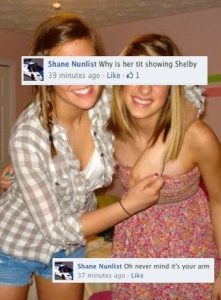
It’s a reminder that context matters.
17.

A hug, a shadow, or even an everyday object can suddenly look like something else entirely when seen the wrong way.
18.
7. Learn to enjoy the moment
When you approach from curiosity instead of fear, it changes everything. You’re not auditioning. You’re exploring. Whether it turns into a five-minute chat or a first date, you walked over, you tried, and you stayed true to yourself.
Confidence feels best when it’s quiet — when you’re comfortable in your own skin and not performing for approval.
8. Build a life that attracts naturally
The strongest confidence doesn’t come from rehearsed lines or fake swagger. It comes from living a life you’re proud of. Work out, pursue goals, develop hobbies, travel, learn things. A full life creates presence, and presence draws people in without effort.
You’ll notice women respond differently when you’re already fulfilled. You’re not looking for someone to fix you; you’re inviting them to join you.
9. Drop the “fear of failure” script
Most guys freeze because they catastrophize. They imagine humiliation. But think it through — what’s the worst that actually happens? You talk, she’s not interested, you move on. Nobody dies. The world doesn’t stop. The next conversation could go better.
Every confident man you’ve ever seen went through that awkward phase. The difference is he didn’t stop trying.
10. Remember: confidence is quiet respect
The best approaches aren’t flashy or dominant — they’re calm and genuine. Confidence is being grounded enough to say hello, to risk awkwardness, to treat someone as an equal rather than an audience.
People freeze.
They zoom in.
And then the same reaction appears over and over:
“Wait… what am I actually looking at?”
That circled area caused one of the most unexpected viral debates of the week.
Some viewers were convinced it was a wardrobe malfunction.
Others believed something was hidden under the skirt.
And thousands insisted the image must have been edited or digitally distorted to look that way.
But the truth behind this “before and after” is far more surprising — and it exposes just how easily the human brain can be tricked.
The mysterious shape wasn’t shocking at all. It was simply a small knot tied inside her skirt. But the angle of the sun, the shadows created by her movement, and the curve of the fabric blended in a way that fooled nearly everyone. Shadows stretched, highlights curved, and the brain filled in the rest automatically.
This is the power of optical illusion. When light hits an object at the wrong angle, your mind doesn’t slow down to analyze — it makes a fast guess. And those guesses are often completely wrong.
When she finally posted the “after” photo, the confusion disappeared instantly. People realized how badly they had misinterpreted what they saw — and most couldn’t believe how easily they were fooled.
It’s a perfect reminder that our eyes don’t always tell the truth.
So look again.
Look closer.
Because once you swipe, everything you thought you saw… changes.