A Reflective Moment From Donald Trump in Washington
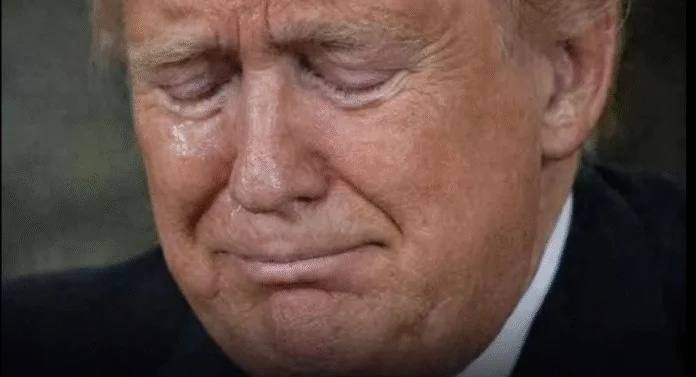
In Washington, D.C., countless moments unfold daily that influence the nation’s direction and shape public conversation.
Some are marked by speeches, ceremonies, and official decisions, while others happen quietly, witnessed by only a few.
These quieter moments often reveal something deeper—insights into leadership that exist beyond policy and politics, grounded in reflection and self-awareness.
One such moment recently drew attention when former President Donald Trump was seen in a contemplative state during his time in the capital.
Removed from cameras, statements, and prepared remarks, the scene suggested a rare pause from the constant intensity that has defined much of his public life.
For someone so often associated with headlines and strong reactions, the stillness stood out.
Leadership is frequently evaluated by actions and results, but it is also shaped by moments of introspection. Observers noted that this instance served as a reminder that leadership involves personal reflection as much as public responsibility. Even the most high-profile figures experience moments that invite perspective and emotional consideration.
For many, witnessing a prominent leader in a thoughtful, private moment humanizes the role itself.
It highlights that leadership is not only about authority or visibility, but also about recognizing the weight of decisions and the personal impact they carry.
In a city driven by power and procedure, such moments quietly reaffirm that reflection remains an essential part of leadership’s human side
In Washington, D.C., history is not only written in sweeping legislation or landmark Supreme Court decisions—it is shaped in brief exchanges in committee rooms, late-night negotiations in congressional offices, and quiet strategy sessions behind closed doors. Every day, countless moments unfold in the nation’s capital that influence policy, redefine priorities, and ripple across communities far beyond the Beltway.
The city functions as the central nervous system of American governance. From Capitol Hill to the White House, from federal agencies to think tanks, the decisions made in Washington set the tone for national debates on the economy, healthcare, national security, education, technology, and civil rights. Yet many of the most consequential developments begin as small, often unnoticed interactions: a bipartisan conversation that opens the door to compromise, a regulatory draft revised after stakeholder input, or a staff-level meeting that shifts the direction of a policy proposal.
Congress remains one of the most visible arenas where these moments play out. Hearings can spark viral exchanges that dominate headlines and social media feeds within minutes. Lawmakers’ remarks—carefully prepared or spontaneously delivered—can energize supporters, provoke criticism, or reframe an issue entirely. Behind the scenes, however, the legislative process is equally shaped by amendments negotiated quietly, votes counted meticulously, and alliances formed across ideological lines.
At the White House, daily briefings, executive orders, and policy rollouts serve as focal points for public attention. A single phrase in a presidential speech can signal a shift in priorities or alter diplomatic relations. Advisors and policy teams work continuously to anticipate challenges, refine messaging, and coordinate across agencies. The result is a steady stream of actions that collectively steer the nation’s course.
Federal agencies also play a powerful role in shaping the country’s trajectory. Regulations proposed by departments such as Treasury, Justice, Defense, or Health and Human Services can have sweeping implications for industries, state governments, and individual citizens. While these regulatory steps may not always generate dramatic headlines, they often carry long-term significance. A rule change or enforcement decision can influence markets, expand protections, or redefine compliance standards nationwide.
The Supreme Court adds another dimension to Washington’s daily impact. Even outside of blockbuster rulings, the Court’s procedural decisions—such as whether to hear a case—can alter legal strategies and public discourse. When the justices issue opinions, they clarify constitutional principles and interpret federal law, sometimes reshaping social and political landscapes for generations.
Beyond formal institutions, Washington’s influence extends through advocacy groups, journalists, policy analysts, and civic organizations. Press conferences, investigative reports, and policy papers contribute to a broader ecosystem of debate. Ideas circulate quickly, gaining momentum through cable news segments, podcasts, and digital platforms. In today’s interconnected media environment, a statement made at a morning briefing can trend nationally by afternoon and spark international commentary by evening.
Lobbyists and grassroots organizers alike seek to shape outcomes. Meetings between lawmakers and constituents can influence votes, while coordinated campaigns amplify specific concerns. Public opinion, measured through polling and expressed through demonstrations, also plays a role in guiding decisions. The dynamic interplay between public sentiment and institutional action keeps Washington in constant motion.
Crucially, many pivotal moments are not dramatic or theatrical. They occur in drafting rooms where legislative language is refined line by line, in agency offices where experts evaluate data, or in private conversations that bridge political divides. These incremental steps, accumulated over time, create meaningful change.
For citizens across the country, the pace and complexity of Washington can feel distant or overwhelming. Yet the policies shaped there affect daily life—from tax rates and student loans to healthcare access and environmental protections. Understanding that national direction is often determined by a series of small but deliberate actions can help demystify the process.
Washington, D.C., is more than a backdrop for political theater. It is a living, evolving center of governance where daily decisions—large and small—guide the nation forward. In a city defined by debate and driven by urgency, each moment carries the potential to influence public conversation and shape the future of the United States.